
Peru Balsam Oil Salvador Rectified
Peru balsam has a cinnamon and vanilla side that gives this impression of sweetness with woody and balsamic facets. It envelops the formula and makes it vibrate with subtlety.
Peru balsam oil brings roundness and softness, giving life to the perfume. Peru balsam is used in the heart of orientals to accompany vanilla and woody accords. Its gourmand facet blends perfectly with chocolate and caramel accords. Its more cinnamic and animalic notes complement tobacco and leather.
Native to El Salvador, it grows at altitudes of 600 to 1,500 metres. El Salvador is the world's leading producer of Peru balsam resin. The main production area is along the southern coast of El Salvador, known as the Costa Balsamera. Ancestral knowledge passed down from generation to generation.
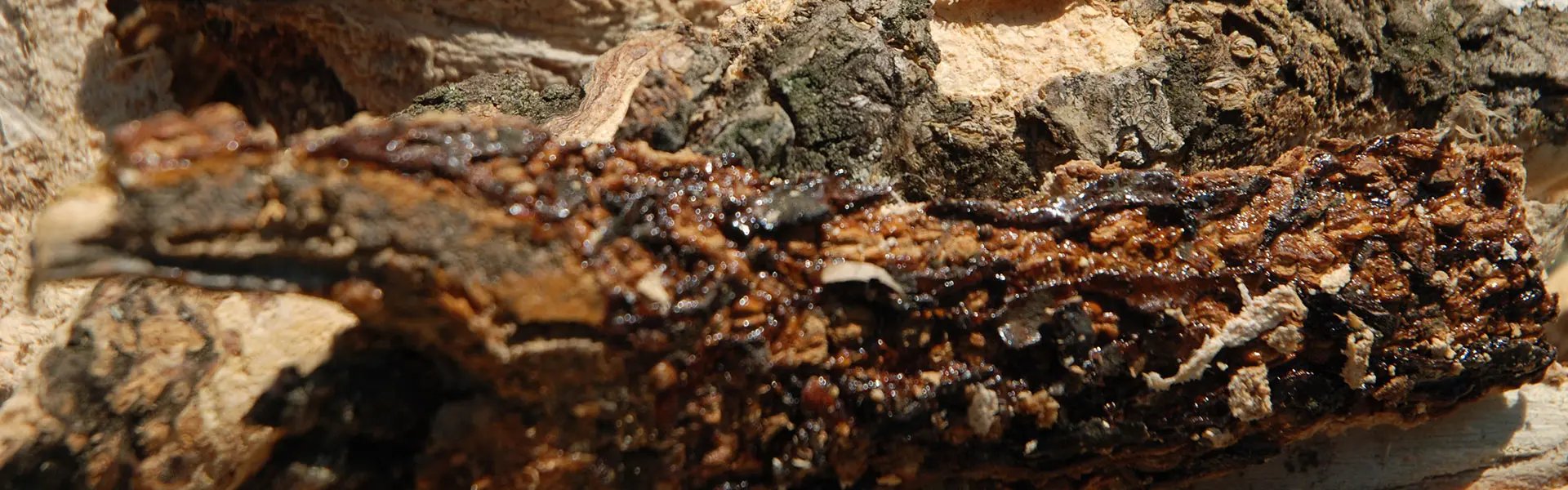
Peru balsam tree is a slender tree with bright green foliage and delicate white flowers that look like butterflies. When tapped, the tree‘s trunk and branches secrete a thick, brown, fragrant resin through many secretory ducts, which heals the bark.
Peru balsam is harvested for nine months of the year, with production peaking from December to May during the dry season. The collectors make several incisions in the tree, from which the balsam flows naturally. The incision is then burned with a bundle of sticks to encourage the balsam to ooze out. The balsameros (collectors) hang cloths where the incision was made to absorb the secreted balsam. After several weeks, the cloths saturated with the resin are pressed and then filtered. The filtered resin is then distilled into essential oil at our factory in Spain.
The tree has never been known to grow in Peru. It was called Peru balsam by the Spanish during the colonial period because it was exported to Europe from the port of Lima, the capital of the Kingdom of Peru.
Have questions or need assistance? Our team is ready to provide you with the support you need. Click the button below to reach out, and let’s start a conversation!
Get in touch