
Styrax Resinoid Honduras
Strong, unique and vibrant, styrax resinoid has a striking strength with animalic and cinnamic facets. Styrax is often used with opulent floral notes such as rose or hyacinth. Styrax is mainly used for its dark, deep, warm, emotional side, but also for its balsamic, resinous and fatty notes, which can add a touch of sensuality.
Styrax can be used in anything: oriental, woody or floral notes. Its wide range of uses is due to its ability to modify and magnify, i.e. to reveal rather than hide other materials, as long as it is not used in excessive quantities.
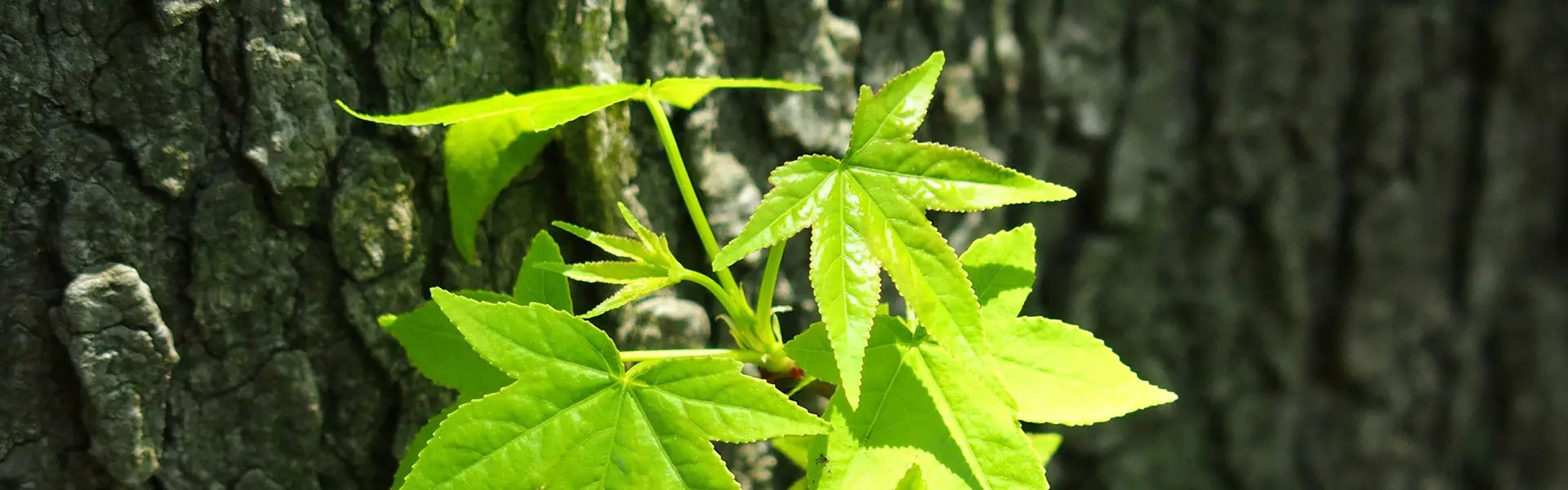
Liquidambar styraciflua can reach a height of 25-35 metres and a diameter of one metre at the age of 200 to 300 years! The leaves (10-18 centimetres long) are star-shaped. The fruit, which resembles that of a plane tree, is spherical and bristly, with a diameter of two to three centimetres. Although Liquidambar styraciflua is found in several countries in Central America, such as Guatemala, Mexico and El Salvador, its resin is only collected in certain regions of Honduras, where the indigenous Pech community has been extracting Liquidambar for centuries.
The Liquidambar styraciflua trees are tapped at the beginning of the rainy season, from April to June. The collectors make hollow incisions in the trunk to start the flow, which collects the precious amber liquid. A mature tree produces between six and eight kg of styrax resin. Four to six weeks after the cut, the styrax is collected. It is then filtered to remove impurities. The filtered and purified resin is extracted at our factory with ethanol to obtain the resinoid.
The styrax tree owes its name, Liquidambar styraciflua, to its orange-coloured resin, known as ‘liquid amber’.
Have questions or need assistance? Our team is ready to provide you with the support you need. Click the button below to reach out, and let’s start a conversation!
Get in touch