
Thyme Red Oil Spain Organic
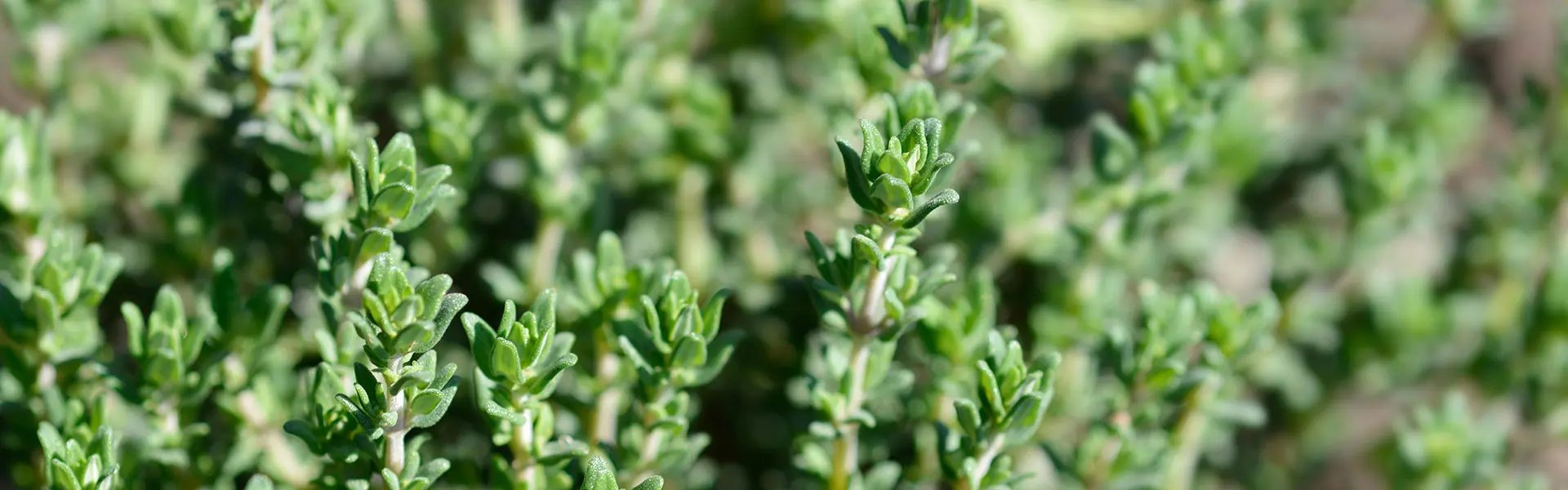
Thyme is one of the most famous of the Mediterranean herbs that make up the characteristic scent of the garrigue, which follows the warm wind down from the mountains. Part of the famous culinary bouquet garni, its aromatic and fresh herbaceous scent of summer meadows has inspired many top notes in fougeres and chypres. The essential oil is a fresh, herbaceous and agrestic thyme-like note with phenolic undertones.
This aromatic scent is often found at the heart of fougeres, chypres and some men’s colognes.
Spanish red thyme, or Thymus zygis, is a species closely related to common thyme, with which it is often confused. Thymus zygis has typical essential oils rich in thymol. Red thyme or Thymus zygis is native to the Mediterranean climate and is widespread throughout the Iberian Peninsula. It grows spontaneously at altitudes between 700 and 1,400 metres, mainly in eastern and southern Spain. This spreading sub-shrub has woody, branched stems covered with small, aromatic, greyish-green leaves with rolled edges and a downy underside.
Thymus zygis is propagated from seed, stem cuttings and layers, mainly in spring. Flowers appear in the leaf axils from late spring to summer, clustered at the top of the stems. During the flowering period, the aerial parts are covered with a multitude of small white flowers.
Harvesting takes place in summer. Once harvested, the thyme goes straight to the factory to be distilled. The name ‘red’ thyme comes from the fact that it was traditionally distilled in copper stills. Nowadays it is distilled in stainless steel stills and the essential oil is more yellowish.
In the Middle Ages, thyme flowers were embroidered on the sashes of knights as a symbol of virtue and courage. It was also added to the baths of knights and soldiers to increase their bravery.
Have questions or need assistance? Our team is ready to provide you with the support you need. Click the button below to reach out, and let’s start a conversation!
Get in touch